Penelope Aldaya’s death and burial
The Shadow of the WindPenelope Aldaya’s death and burial are the hidden history at the center of the Aldaya crypt: Daniel discovers her name on a coffin marked 1902–1919, and later evidence places her beside David Aldaya in a shared tomb. Her grave exposes the gap between private loss and official accounts, which are repeatedly manipulated to erase identities and conceal what happened.
Discovery in the Crypt
When Daniel descends into the crypt beneath the Aldaya mansion, he finds two white coffins on a marble slab, one far smaller than the other. The dust covering their inscriptions makes the dead initially anonymous. He brushes the larger coffin’s lid and reads Penelope Aldaya’s name and the dates 1902–1919. The discovery turns an obscured burial into a specific loss: Penelope died at seventeen.
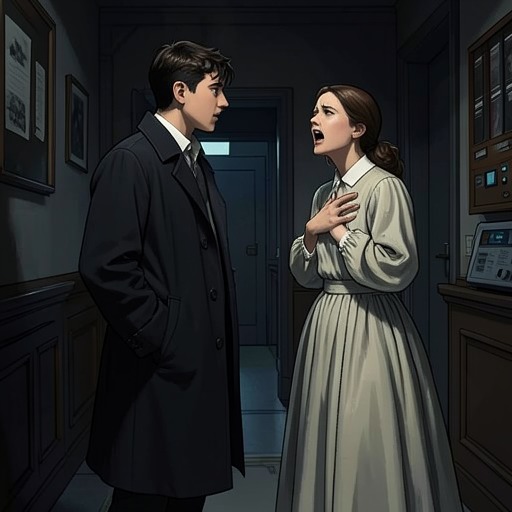
Before Daniel can examine the second coffin, a voice from the shadows orders him to leave. He recognizes Laín Coubert and flees with Bea, who has not seen or heard what alarmed him. The interrupted discovery leaves the crypt’s second burial unexplained at first, while confirming that Penelope’s grave is not simply an abandoned family tomb but a place whose contents remain guarded.
The Tomb and Its Pairing
Later, Julian enters the same underground chamber. Its two tombstones stand side by side, bearing the names Penelope Aldaya and David Aldaya; the dates identify Penelope as having died in 1919 and David in that same year. The paired inscriptions clarify what Daniel’s first glimpse could not: the smaller coffin belongs to David, and the two deaths are joined in burial as well as in the history the mansion conceals.
The tomb gives material form to the absence of a story that should have been told. Its names and dates survive under dust and cobwebs, while the chamber’s enclosure separates the dead from the mansion above. Returning to this space changes the evidence from an isolated grave inscription into a relationship between two people whose fates have been kept out of public view.
Records and Concealed Identity
The crypt is not the only place where official and private accounts diverge. A letter addressed to Julian, postmarked 18 October 1919, carries Penelope Aldaya’s Barcelona address. Its age and preserved handwriting connect her to the period of her death, though the letter itself does not establish the circumstances of that death.
Years later, a morgue account describes a body brought in during September 1936 with a book and a passport identifying the dead man as Julian Fortuny Carax. The passport recorded a recent return to Spain, and the body was said to have suffered a gunshot wound. A policeman then overrode the identification procedure, signed the registration as he chose, and ordered the body buried in a common grave at Montjuïc. The episode reveals a system in which names and burials could be assigned by force rather than established by evidence.
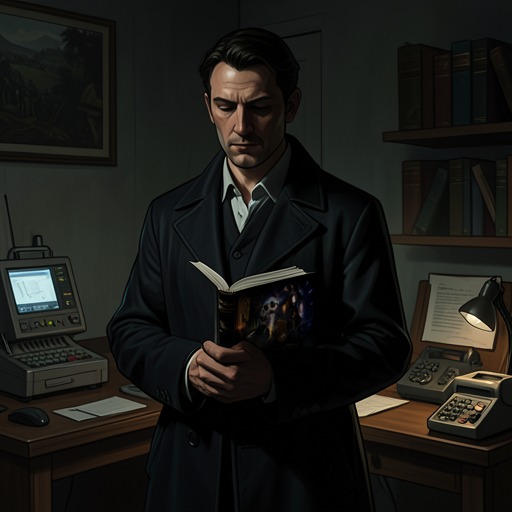
The later account explains the deception: the body abandoned in the Raval was Miquel Moliner’s, not Julian’s. Because Miquel had left his papers at home, the morgue found only a damaged passport in Julian Carax’s name and a copy of The Shadow of the Wind. Francisco Javier Fumero recognized Miquel but signed the report identifying him as Julian and ordered his burial in a common grave. This false record contrasts with Penelope’s grave, where her own name and dates remain legible, and shows how state power can make a death disappear beneath an imposed identity.
Memory and the Limits of the Evidence
The evidence presented here identifies Penelope’s age at death, the year of her death, and her shared tomb with David. It does not, within these scenes, establish the full circumstances of her death. The distinction matters: the crypt provides a durable record of names and dates, while the documents and official procedures surrounding other deaths demonstrate how easily a public account can be falsified.
The novel makes the tomb an archive that has been hidden rather than destroyed. Daniel’s discovery begins with dust on a coffin; Julian’s return reveals the paired names. Against the changing and corrupted records of the morgue, the grave preserves the people whom the household history and official paperwork have failed to explain.